Paul Bruun

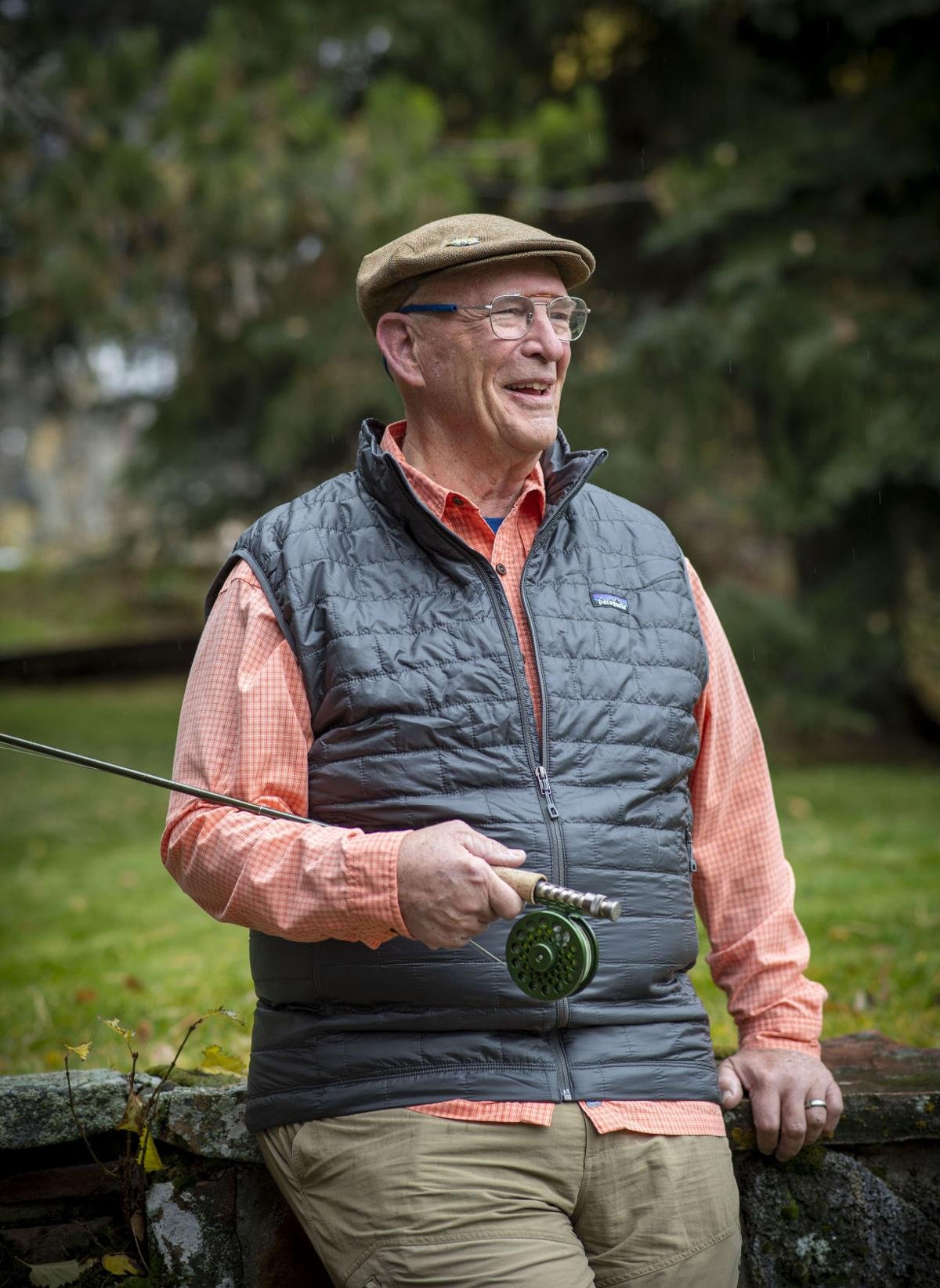
The fly fishing bug from Ed Zern’s cartoon-filled Catskills-classic, "To Hell With Fishing," infected Paul Bruun in the 1950’s. Although hundreds of miles from any trout stream, discovering two 9-ft. bamboos and a Medalist reel in his dad’s Miami Beach garage propelled the youngster to nearby Biscayne Bay seawalls to cast crudely tied bucktails and streamers.

In 1955 “Big Paul,” a veteran newspaper man, introduced his 6th grader to fly fishing for trout during a two-month Western road trip that included Green, Madison, Truckee and Merced River outings. Visiting New York the next year, Jim Deren at the Angler’s Roost encouraged the Bruuns to catch Atlantic salmon in the Miramichi during their driving vacation to Quebec.

Years later when offered the Jackson Hole Guide editor job, Paul’s friend, Lefty Kreh solved a delicate family dilemma that required leaving aging parents and their thriving South Florida newspaper. Lefty reasoned: “Your parents know you love newspapering and the West. Try Jackson for a year. Then you will all know what to do!”

Since that April 1973 relocation, Bruun fashioned a credible Wyoming career that introduced a weekly Outdoors column that he continues (biweekly) in the Jackson Hole News & Guide, established/edited the Jackson Hole Daily, served for 12 years on the Jackson Town Council as the original Fishin’ Politician, guided/outfitted fly fishing float trips for 37 seasons and with partner Ralph Headrick, created the South Fork Skiff, a revolutionary low-profile fiberglass river boat especially for fly fishing.

Cumulation of research, expert information and history from decades of writing columns, articles and demonstrations as well as chronicling extensive guiding and travel activities allowed Bruun to contribute suggestions both to readers as well as fly industry innovators such as SIMMS, Orvis and Patagonia, where he still fulfills dual roles as token XXL and longest tenured Fly Fishing Ambassador. His “Classics” column on the final page of TU’s TROUT magazine highlights historical fly fishing subjects.

Bruun is especially proud of having been designated the Wyoming advisor for the expansion of the Dingell-Johnson Aid to Sport Fishing Act by the sponsoring American Fisheries Society. Introduction of this project to then Wyoming U. S. Senator Malcolm Wallop ultimately resulted in the 1984 Wallop-Breaux Amendment that extended 10% excise tax coverage to imported tackle, marine/navigation equipment and clothing.“I’ve benefitted from extensive help by skilled and generous mentors. Their inspiration encourages me to pass along as much fly fishing and outdoors knowledge in order to leave our precious resources a little better than before.”

CFFCM OfficeHOF4
Dave Brandt

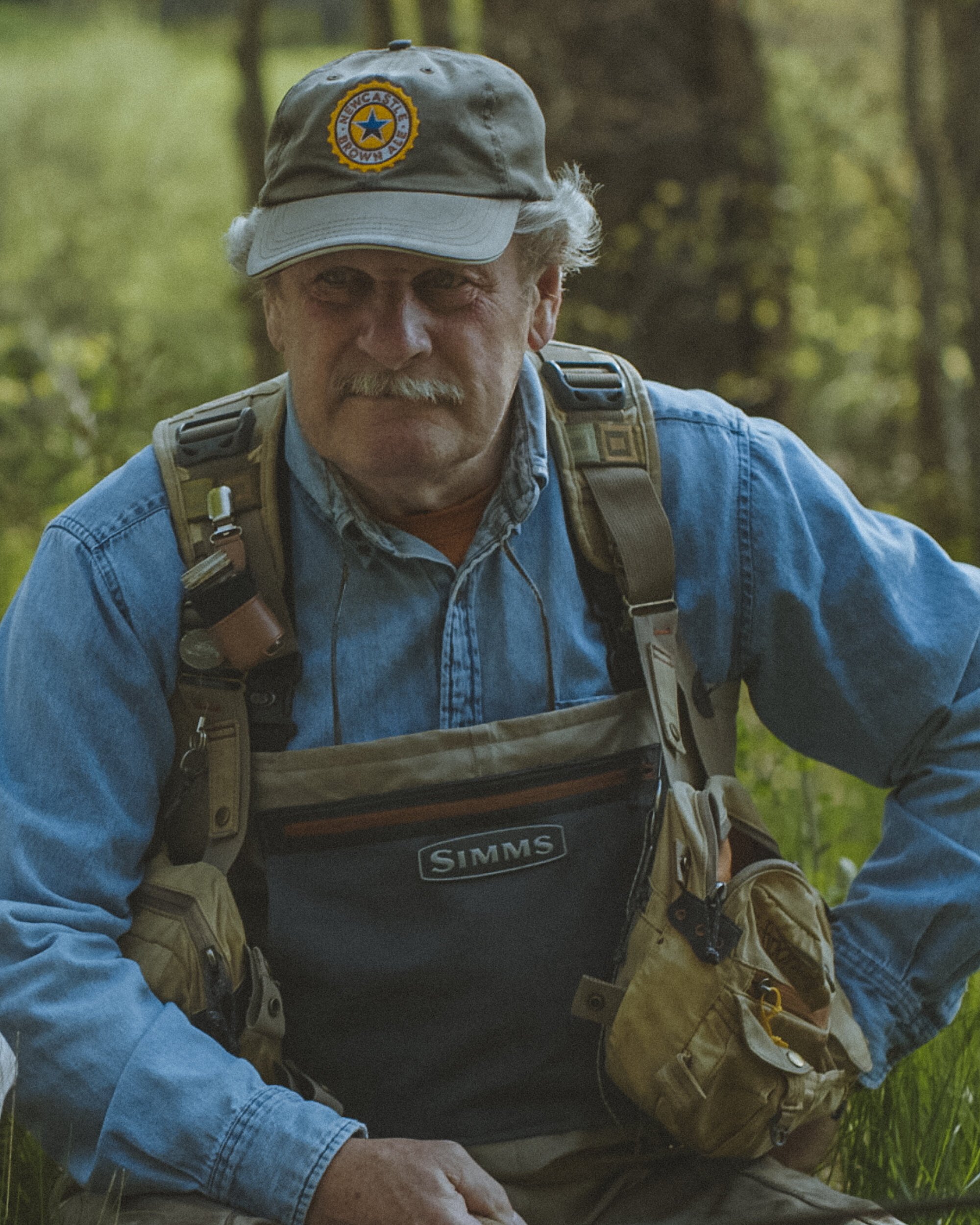
Dave Brandt (1944-2020) was born in Oneonta, NY. He was a tool and die designer at Amphenol Corp Bendix Connector Division in nearby Sidney until its closing in 1983. His designs resulted in many patents for the Company.

Dave had a life-long love of fly fishing, tying, and conservation that was greatly influenced by Harry and Elsie Darbee. Dave never did anything halfway and would delve deep into the history of anything that caught his attention be it fly fishing, tying and its materials, conservation, or billiards.

His casting so impressed Joan and Lee Wulff that in 1987 he was invited to be an instructor at their world-famous Fly-Fishing School, where he remained a fixture until his passing more than 30 years later.

Dave’s accomplishments and awards were many: He invented the “Tied and True” hackle gauge, created several new flies such as his BG Dunn, taught classes, made tying DVDs, drew technical illustrations for friends books and wrote a dozen articles under the pseudonym "Brooks Gordon”. In 2004 he became only the 3rd American to be honored with the prestigious Canadian IWL ‘Jack Sutton’ award. Trout Unlimited Chapter 210 officially became the ‘Dave Brandt’ Chapter in 2007, and in 2017 Dave was inducted into CFFCM’s ‘Catskill Legends’.

For more than 30 years Dave, an acknowledged master of Catskill style flies, presented his expertise at most of the major fly-fishing shows, in the States, Canada, and Europe. Onlookers were fascinated with the magic he performed tying wood duck wings on his flawless dries. And in 2018 Dave had a major roll in the movie “Land of Little Rivers,” a fitting finale to a life well spent.

CFFCM OfficeHOF4
Robert D. Taylor
bob taylor HOF 2019.jpg

Legendary bamboo rod maker Bob Taylor was inducted into the Fly Fishing Hall of Fame in 2019.

Taylor began building rods just out of high school and has spent his life in the craft, with Leonard Rods, with Thomas & Thomas, and on his own. Any time Taylor talks rod building he draws a crowd eager to learn from his experience.

CFFCM OfficeHOF4
Nathaniel Pryor Reed

Nathaniel Reed was among the architects of the Environmental Protection Act, the Clean Air Act and the Clean Water Act, and was instrumental in organizing the first Earth Day. 

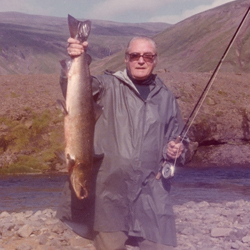
On July 3 in Quebec, Mr. Reed fell and struck his head on a rock just  after hooking a 16-pound salmon on one of his favorite rivers, and never regained consciousness. He died eight days later, on July 11, 11  days short of his 85th birthday. 

The New York Times hailed Reed as a “champion of Florida’s environment,” detailing his efforts to prevent a jet port from being built in Big  Cypress Swamp, leading to his work in drafting the Endangered Species Act in 1973. 

Mr. Reed served as an Assistant Interior Secretary from 1971 to 1977  under presidents Richard M. Nixon and Gerald R. Ford. According to  The Washington Post, he helped preserve millions of acres of wilder ness in Alaska, banned dangerous pesticides and endured death  threats from Western ranchers after he sent federal agents to stop the  widespread killing of federally-protected eagles. 

In 1972, Mr. Reed accompanied Julie Nixon Eisenhower on a tour of  the Everglades, the Post recalled. Two years later, Florida’s Big Cy press National Preserve was established as one of the country’s first  two national preserves. 

Mr. Reed also had roles in the banning of DDT and other chemical  agents dangerous to wildlife and humans. He took steps to preserve  California redwood forests, blocked construction of a jet airport near  Jackson Hole, Wyo., and called for a treaty protecting polar bears from  hunting. 

“I suggest to you that the American dream, based as it is on the concept of unlimited space and resources, has run aground on the natural  limits of the earth,” he wrote in a 1974 essay. “It has foundered on the  shoals of the steadily emerging environmental crisis, a crisis broadly  defined to include not only physical and biographical factors, but the  social consequences that flow from them.”

CFFCM OfficeHOF4
Fran Verdoliva, Jr. 

Born in Oswego, N.Y., Fran's early fascination with fish and fishing began with the waters around Lake Ontario, where much of his fisheries work continues. 

His fly fishing commenced while he was young enough to run a paper route, the proceeds from which going mostly to support his growing  tackle needs. As he was developing as a serious fly rodder, he found  the Delaware River and as a still youthful angler, he spent much time  there, on the Beaverkill and other Catskill waters. 

Graduating from Syracuse University, he did further work in outdoor  education and natural resource management, all while beginning to  earn a living guiding and otherwise working in the fishing world. Fifteen more years of guiding nearly took Fran firmly into the private  sector working in the fishing business. This valuable experience and  his keen natural awareness of the great potential of the Great Lakes  fishery all served him well. He was often called upon to counsel with  the New York DEC on fisheries and natural resource matters. He became a specialist with DEC, leading to his work with the hatchery at Altmar. 

Fran was instrumental in the first dam removal project on any Lake  Ontario tributary. This venture soon proved to be key in restoring valuable Brook Trout spawning habitat to that stream. 

He was responsible for the first "fly fishing only" section on public water in New York in 1989. 

He was the lead person on a comprehensive habitat analysis of lands around Lake Ontario. His efforts as a spokesman for the fish pioneered the teaching of anglers that the big Pacific Salmon that entered the Lake Ontario feeder streams might indeed be taken using tradition al sport fishing methods and tackle. He championed this at a time when many said snagging of these fish be allowed to continue. Fran's ethics and his resolution were ultimately key in the implementation of the "no snagging" regulations in place today, and in providing the great fishing to be found around Lake Ontario today.

CFFCM OfficeHOF4
Charles Cotton

Born in 1630, Cotton is being honored for his contributions to The Compleat Angler, by CFFCM Hall of Fame member Izaak Walton. 

An angler in his own right, Cotton contributed "Instructions how to angle for a trout or grayling in a clear stream." His additions spanned 12  chapters on fishing clear water, mainly on fly fishing.  

Another addition to The Compleat Angler was Cotton's well-known poem "The Retirement", which appeared from the 5th edition on wards. 

Some of Cotton's advice is still useful, such as casting away from a  fish, and using smaller, neater flies rather than large, bushy ones. 

He devotes a whole chapter to collection of flies for every month of  the year. His description of the stonefly still rings true today: “His body is long and pretty thick, and as broad at the tail, almost, as at the mid dle; his colour is a very fine brown, ribbed with yellow and much yellower on the belly than on the back: he has two or three little whisks  also at the tag of his tail, and two little horns upon his head: his wings,  when full grown, are double, and flat down upon his back, of the same colour but rather darker than his body and longer than it... “On a calm day you shall see the still-deeps continually all over circles by the fishes rising, who will gorge themselves with these flies, will they purge again out of their gills.”

CFFCM OfficeHOF4
Vernon S. “Pete” Hidy
PLACEHOLDER_image3.png

Vernon S. “Pete” Hidy was a fly-fishing writer, editor, photographer, conservationist, and innovative fly tyer who campaigned tirelessly for James E. Leisenring’s place in the fly-fishing pantheon. It was Hidy who coined the word flymph (c. 1962–64) to help popularize aspects of the old British tradition of hackle flies (or soft hackles) fished just below the water’s surface. 

 Hidy was born on August 9, 1914, in Springfield, Ohio. After moving to Pennsylvania in 1934, he fished for ten years in the Pocono and Catskill mountains, where he became a fishing companion to both Reuben R. Cross and James E. Leisenring. The Art of Tying the Wet Fly (Dodd, Mead, 1941), co-produced by Leisenring and Hidy with mentoring from Cross, became a milestone of American angling literature. After serving in the Navy in WW II, Hidy moved his family to the west coast where he lived and fished in California, Oregon, and Idaho.

He founded the Flyfisher’s Club of Oregon and was influential in talks between his employer, the Boise Cascade Company, and the Nature Conservancy, resulting in the establishment of the Silver Creek Preserve in Idaho. He was also a member of the Anglers’ Club of New York and the Flyfishers’ Club, London. The journal of the Oregon club, The Creel, which Hidy founded and co-edited with Robert Wethern and others, appeared twenty-one times in as many years, 1961–1982, ceasing upon Hidy’s death in Boise, Idaho, January 1983, at age 68.

Arnold Gingrich, cofounder and editor of Esquire magazine and author of The Well-Tempered Angler, The Joys of Trout, and American Trout Fishing, wrote:

 “As editor of The Creel, the beautiful and distinctive organ of The Flyfisher’s Club of Oregon, Pete Hidy was a trailblazer in bringing a civilizing overlay of appreciation of the traditional and historic lore to the then generally rough and ready state of Western fly fishing in general. To my mind, V. S. Hidy can never be praised enough, for he showed the way, like a lantern in the dark, long before such journals as The Flyfisher, Trout, Fly Fisherman Magazine, and The American Fly Fisher were ever dreamed of. He is one of those rare spirits who could, almost single-handedly, give a sport a good name.” [Arnold Gingrich, The Fishing in Print (Clinton, N.J.: New Win Publishing, 1974), 323.]

Hidy’s most personal work was the book The Pleasures of Fly Fishing (Winchester Press, 1972) featuring eighty-seven photographs by Hidy, selected passages from angling literature, and a foreword by Sparse Grey Hackle. The spirit of that project is summarized in Hidy’s credo (otherwise known as “Hidy’s Law”): “Fishermen may find unexpected pleasures more enjoyable than those they seek.”

CFFCM OfficeHOF4
Steve Rajeff
PLACEHOLDER_image2.jpeg

Steve Rajeff’s tournament casting accomplishments to date (2017) include 45-time Grand All-Around Champion of the American Casting Association, and 14-time World Casting Champion. 

Born in San Francisco in 1956, Rajeff grew up a few blocks from the Golden Gate Angling and Casting Club. Caster and coach Mel Kreiger met Steve when he was 9 or 10 and saw promise in the boy’s casting. Within weeks, Steve beat Mel and all the men at GGACC in a casting tournament. Casting champion Jon Tarantino inspired Steve to compete and used him as a role model. GGACC sponsored Steve at age 13 to travel and compete in the 1971 ACA Nationals in St. Louis. Steve took third in the All-Around: two years later, at age 15, he took first.

During summers in the ‘70s, Rajeff guided in Alaska and taught at the Fenwick Fly Fishing Schools in California, Idaho and Montana. In 1979, he earned a BA in Marketing at San Francisco State. His first industry job was at Winslow Manufacturing, later renamed SAGE, thanks to Steve’s suggestion. Seeking an equity stake for the future, Steve left SAGE and took a job at the newly formed G. Loomis company, where he learned quickly from Gary Loomis and took over rod design. Steve is responsible for the actions of the first IMX and GLX rods.

In 1994, Rajeff designed the first single-foot fly-rod guides and introduced rods with them. This achieved a significant weight reduction since they used less metal, windings and epoxy. Steve designed all the rods the G.Loomis company offered from 1985 to the present.

 Rajeff was inducted into the Northern California Council of the Federation of Fly Fishers Hall of Fame in 2006, and the California Outdoorsman Hall of Fame in 2009. He has served on the Board of Directors for the International Casting Sport Federation and the American Casting Association for over 10 years, and has also held the office of Vice-President of the American Casting Association, a 501(C)3 organization.

Steve’s tournament casting accomplishments to date (2017) include 45-time Grand All-Around Champion of the American Casting Association. He is also 14-time World Casting Champion. In competition in ICSF 2-Hand Fly Distance in Toronto, he cast 306 feet. In 2009 at the World Championships of Fly Casting in Ireland, Steve cast 165 feet with a floating line and 36 feet of backing. In the Sea Trout Event, the official line is an 8wt WF floating line measuring 120 ft.

Steve has been an integral part of the modern fly fishing age. For the future, he looks forward to new technology, good fishing and matching the casting longevity of one of his mentors, the late Dick Fujita, who participated in 52 ACA Nationals.

CFFCM OfficeHOF4
Ted Niemeyer
TedNiemeyer.jpeg

For Ted Niemeyer, fly tying was nearly a religion. He was a meticulous craftsman, artist, fly tying historian, fanatical collector and the ultimate perfectionist.

Niemeyer was a master fly tyer who developed a keen sense of minimalist design and proportion early on. He deconstructed flies of the great tyers of the past to learn how their flies were built, and was an advocate of natural materials when synthetic materials were gaining popularity. His design philosophy stressed movement and a sparse silhouette as the keys to effective fly design. A pioneer of realism in fly tying, Ted was one of the first tyers to use goose biots for legs on his realistic stripped quill nymph patterns. He was well known for his realistic nymphs, yet his versions of classic patterns set a new standard.

Niemeyer was so obsessed with quality materials that he spent his lunch hours searching for new materials in New York City’s Garment District. Known for finding a use for all parts of the feather, he was infamous for tying amazing flies at demonstrations from the scraps of feathers and threads discarded by other tyers. The one feather Ted did the most with was the goose wing feather. From that one feather came his stripped quill nymphs, dyed and married Atlantic salmon fly wings, trout wet fly wings, wing cases, and the legs in countless nymph patterns. All styles of fly were equally interesting to him.

In 1967, Niemeyer was featured in a Sports Illustrated magazine article on realistic and innovative fly tying. He wrote the fly tying column for Fly Fisherman magazine from 1976 to 1981, and the chapter he wrote for the classic book “Art Flick’s Master Fly-Tying Guide” brought him into the spotlight. He drew large crowds when demonstrating fly tying at fishing and hunting shows in New England and the Pacific Northwest, often giving away special flies and materials to interested beginners. His flies brought high bids at charity auctions all over New England. 

Niemeyer spent many hours at the Angler’s Cove fly shop on 2nd Avenue in New York City learning the history and methods of the Catskill school of fly tying. He studied intensively with Charles Defeo, and revered Harry and Elsie Darbee, Walt and Winnie Dette, Roy Steenrod, and Rube Cross among others. He became one of the few experts who could reliably authenticate flies tied by other master tyers. He was methodical in his analysis and contagious with his enthusiasm for the art form.

CFFCM OfficeHOF4
Ted Rogowski
Screen Shot 2021-07-06 at 9.21.58 AM.png

Theodore Richard (Ted) Rogowski was born December 20, 1927 in Chicopee, Massachusetts and passed away peacefully July 5, 2021, at age 93.  Ted lived a long and productive life connecting countless people to his passion of fly fishing, environmental protection and conservation.  A beloved, grandfather, and husband, Ted was raised in a family of nine; his father Louis Rogowski and mother Leonora Ciesla had seven children of which Ted was the youngest.  He is survived by his sister Evelyn Buika; his daughter Laurie Heintz, sons Edward (Buzz) Rogowski and Barry Rogowski; grandsons Bron Heintz, Toren Heintz, and Connor Rogowski; granddaughter Shannon Rogowski.  

Ted earned a full scholarship to Amherst College, where he received his undergraduate degree. He served in the US Army during the Korean war, then attended Columbia Law School. He photographed and filmed with outdoor writer/filmmaker Lee Wulff and travelled with Lee to locations in the provinces of Newfoundland and Labrador during law school summers. Ted joined the law firm of Cadwalader, Wickersham & Taft, LLP as a patent attorney; clients included baseball legend Ted Williams and playwright Eugene O’Neill.

He married Marjorie Stoughton and they moved their young family to Virginia; Ted worked for the federal government in Washington, D.C. as an attorney.  He helped form the Environmental Protection Agency, and implemented the federal Clean Water Act, building sewage treatment plants and conducting civil enforcement to clean the nation’s waterways. He also helped protect the Hudson River Valley from excessive highway projects.

Ted was a tireless volunteer for many fishing and conservation organizations, including The Anglers Club of New York, The Federation of Fly Fishers, Washington Fly Fishers, and the Catskill Fly Fishing Center & Museum (CFFC&M). He was one of the founders and the fourth president of the New York City conservation group Theodore Gordon Flyfishers, and in 2002 was recognized with its prestigious Salmo Award for conservation activism. In 2017 Ted was inducted in the CFFC&M’s Hall of Fame.

In the early 1970s Ted moved his family to Seattle, Washington, to serve as EPA’s  Regional Counsel for Region Ten, overseeing environmental law cases for the states of Alaska, Idaho, Oregon, and Washington. He was an avid life-long trout, salmon and steelhead fisherman, and enjoyed summer fishing vacations in Montana, Alaska, Wyoming and Yellowstone Park. 

After the passing of his wife Marjorie, Ted married Joan Salvato Wulff in 2002, and lived on the Beaverkill River with Joan for the remainder of his life, fishing the local rivers and continuing his volunteer efforts at the Catskill Fly Fishing Center & Museum, as well as with the Boy Scouts of America's fly fishing badge.

At the age of 93, Ted was proud to learn that his newly designed dry flies were featured on the cover of Fly Tyer Magazine accompanied by his article “A Better Way to Tie Mayfly Wings.”  

CFFCM OfficeHOF4
Bill Elliott

Bill Elliott is among the world’s premier wildlife artists. His vivid paintings, full of action and light, capture the beauty of wild animals and fish. Elliott’s paintings and drawings have illustrated 38 books, including Datus C. Proper’s What the Trout Said and Stoneflies for the Angler by Eric Leiser and Robert H. Boyle. His work has appeared in numerous magazines, including Field & Stream, Outdoor Life and Sports Afield.

Elliott has joked that God displayed an “interesting” sense of humor by starting the young artist’s life in Brooklyn, New York. His urban surroundings did nothing to damper his love of wildlife, and by age 11 he had already made up his mind to be a wildlife artist. By 13 Elliott had taught himself to fly fish, traveling by train to fish the East Branch of the Croton River in the Hudson Valley – a river that would one day benefit greatly from Elliott’s conservation ethic. After his studies at the School of Visual Art in New York, he served in the U.S. Army, where postings in Alaska and New Mexico afforded him the opportunity to hunt, fish and serve as an illustrator.

Back in New York, Elliott designed advertisements for Macy’s and then became the Art Director at the Bronx Zoo.

Eventually, Elliott became a freelance artist, establishing friendships with Bernard “Lefty” Kreh, who first took him fishing for tarpon, and Eric Leiser, who introduced him to leading figures in the publishing world. Elliott’s trout lithographs at the Crossroads of Sport Gallery in New York began selling faster than he could produce them. When he relocated to the Hudson Valley, Elliott became active with Trout Unlimited and worked to enlist the support of local sportsmen’s clubs for reduced stocking and more restrictions on the East Branch of the Croton, which helped the river become one of New York State’s premier tailwater trout fisheries.

Elliott and his best friend and angling companion, James “Jed” Dempsey, made a highly significant contribution to the Catskill Center when Dempsey purchased legendary bamboo rodmaker Pinky Gillum’s milling machine and the two men transported it from Ohio for installation at the Center.

Elliott has traveled the world in pursuit of fish to catch and paint, including 38 trips to the Amazon between 1998 and 2008. In 1985, Elliott and his wife, Carol, moved from Chambersburg, Pennsylvania to Tequesta, Florida, where he continued his pursuit of saltwater fish, a passion ignited when he caught 63 tarpon on his first trip to Costa Rica with Lefty Kreh. He lives today in North Carolina, where he says his life has come full circle, back to catching and painting trout.

CFFCM OfficeHOF4
John Gierach

John Gierach is the most popular fly fishing author of his era. A gifted writer and keen observer, his essays are beloved for their wry humor, irreverent wisdom and unapologetic devotion to fly fishing as a way of life.

Born in Illinois and raised in Robbinsdale, Minnesota, Gierach earned a degree in philosophy from Findlay College in Ohio in June of 1969. In July of that year he bought his first Colorado fishing license, and began a life of fishing and travel in the mountain west and around the world that provided the settings, characters and plots for scores of stories over the next five decades. He is the author of 20 books, including two “obscure books of poetry” and 18 collections of fishing essays. His first book, Trout Bum, established him as the spiritual leader of a generation of anglers who longed for the freedom to spend their time wading mountain streams, puzzling out mayfly hatches and using bamboo rods to cast their flies to strong, wild trout.

Gierach’s stories gave readers across the country a feeling of familiarity and affection for his adopted hometown of Lyons, Colorado and its local streams, the Big Thompson and St. Vrain Rivers. His spare but exquisitely crafted depictions of the people he fished with, including A.K. Best, Ed Engle and Mike Lawson, brought them to life in his readers’ minds. He writes about blue-ribbon trout in famous rivers and blue-collar bass in golf course ponds, about bouncing around the Midwest in his Uncle Leonard’s fishing car, the near-folly of salmon fishing in Scotland, and long trips in his pickup truck to the magical streams of Montana.

Gierach is the only fly fishing writer to consistently be published by the one of the world’s premier publishing houses. The back covers of his books include praise not only from the fly fishing press but from such authorities as Publisher’s Weekly and Sports Illustrated, which ranked him in the same league with Mark Twain. The Wall Street Journal has called him “the voice of the common angler.”

Seamlessly entwined with Gierach’s light-hearted, self-deprecating humor is a serious and inspiring conviction that wild creatures and wild places must be preserved. And despite his own commitment to fly fishing, the split-cane-wielding philosopher gently reminds anglers not to take themselves or their sport too seriously. After all, at the end of the day, they are “standing in a river, waving a stick.”

CFFCM OfficeHOF4
Curt Gowdy

One of the most honored sports journalists of his era, Curt Gowdy began fly fishing at age 8 with his father, Edward Gowdy, on the rivers of their native Wyoming. As his career unfolded, Gowdy brought the joy and excitement of fly fishing and other methods of angling to millions of Americans as host and producer of The American Sportsman. 

A towering figure in American broadcasting, Gowdy is widely known to generations of sports fans. He covered eight Olympic games, nine Super Bowls, 16 World Series and 24 NCAA championship tournaments. He was at the microphone when Ted Williams homered in the final at-bat of his career, when the Mets beat the Orioles in the 1969 World Series, when Joe Namath and the Jets beat the Colts in the 1969 Super Bowl and when Hank Aaron broke Babe Ruth’s home run record. He was the first sports figure to win the coveted Peabody Award for Outstanding Journalistic Achievement.

Gowdy is celebrated in the Catskill Center’s Hall of Fame for his legacy in fishing. He was especially enthusiastic about the fishing in the Florida Keys, beginning in 1949 when he fished with Ted Williams during spring training. He served as the celebrity host of the Redbone Celebrity Tournament Series (for cystic fibrosis research efforts) and the Boy Scout Backbone Celebrity Classic. Six of his 13 Emmy Wards were for his work on The American Sportsman. In tribute to his many years with the Cheeca Redbone, the Curt Gowdy Lounge, a popular sports and anglers oceanfront bar, was named after him at the Cheeca Lodge in Islamorada in the Florida Keys. Of the 21 halls of fame into which he has been inducted, five, including the Catskill Center, are dedicated to fishing and conservation. 

Gowdy was a tireless advocate for sportsmanship and the protection of fish and fish habitat. He was a founding member of Bonefish and Tarpon Unlimited, the chairman of the American League of Anglers and a trustee of the International Game Fish Association. He served on Board of Advisors for the National Foundation for Conservation Environmental Officers; was the Chairman of American League of Anglers, a conservation group to preserve the outdoors and fishing, and was a trustee of the International Game Fish Foundation and the Buffalo Bill Memorial Association. Perhaps most fittingly for a lifelong sportsman, an outdoor reserve bears his name: Curt Gowdy State Park near Cheyenne, Wyoming.

CFFCM OfficeHOF4
Charles César Ritz

The son of the founder of the Ritz hotel chain, Charles César Ritz was a major figure in fly fishing in the 20th century. Sent by his father from his native France to learn the hotel trade in New York, the 26-year-old spent his free time fishing the Beaverkill River and repairing split cane fly rods from a pawn shop and re-selling them to Abercombie & Fitch.  Back in France in 1927, Ritz opened a shoe store, but here, too, he indulged his passion for rodmaking. From the back room of the shoe store came the parabolic rod that became a favorite of American anglers. It began as an accident: a courier had broken a Ritz rod he was delivering to a Paris banker. Ritz repaired it, kept it and tried it out upon his return to the United States, where the rod’s distinctive power impressed fellow members of the Angler’s Club. Working with John Alden Knight and the renowned rodmaker Jim Payne, Ritz’s version of the parabolic rod, with its characteristic flexing butt and stiff mid-section, won praise in the sporting press and quickly caught on with the angling public in the years after World War II. It was produced commercially by Paul H. Young, Abu Garcia, Pezon et Michel and Payne.

Ritz went on to fish the great rivers of Europe and the world, in the company of leading citizens and the top fly fishers of the era. He was the recipient of a thank-you note on White House stationery from President Dwight D. Eisenhower for his gift of a reel, lines and instructions. “All I have to do,” the president wrote, “is the find the leisure time and the proper place for one of my favorite sports.”

Ritz was an early practitioner of catch-and-release, along with his friend, Lee Wulff. His influential book, A Fly Fisher’s Life: The Art and Mechanics of Fly Fishing, was published in French in 1953 and translated into German in 1955, English in 1959 and later in Japanese and Italian. It was continually updated until 1972, the year of its ultimate edition. A Fly Fisher’s Life includes an introduction by A.J. McClane and a forward by Ernest Hemingway, who called Ritz “one of the very finest fly fishermen I know.” Ritz co-founded the magazine Plaisirs de la Peche, with Hemingway on its editorial board, and was the author of Fixed Spool Reels and Tackle in 1952.

In 1958, Ritz founded the International Fario Club in Paris. The club went on to establish an annual award in his memory, the Prix Charles Ritz, which is bestowed upon on individuals and organizations that work for the protection and restoration of wild trout and salmon habitat.

CFFCM OfficeHOF3
Bob Popovics

Living as he does in Seaside Park, New Jersey, a small town on a slim barrier island with Barnegat Bay on one side and the Atlantic Ocean on the other, it’s no surprise that Bob Popovics is a die-hard saltwater fly-fisher. He specializes in casting from the surf for striped bass, bluefish, and false albacore as they prowl the ocean’s edge, ever in search of prey.

His knowledge of these fish and their habits has made him a master angler. His capacity to imagine new ways of making flies has made him one of most influential saltwater fly-tyers. Popovics’s book, Pop Fleyes: Bob Popovics’s Approach to Saltwater Fly Design, co-authored by Ed Jaworowski, revolutionized saltwater fly-fishing with a suite of patterns that employed new techniques and materials to produce lifelike imitations of the forage fish of the Atlantic coast. The Surf Candy, the Jiggy, the Bucktail Deceiver, the Ultra Shrimp, the Siliclone, the Bob’s Banger and many more were introduced to the world in Pop Fleyes, and countless anglers have tied them and used them to catch truly memorable fish in the 14 years since the book’s publication. No wonder Popovics’s friend Lefty Kreh has called him “the most innovative fly-tyer I have ever known.”

Popovics popularized the use of epoxy to give baitfish and shrimp patterns slim, glossy and durable bodies, and silicone to create flies that were light, translucent and flexible. His Hollow Fleye concept made it possible to produce very large flies that could still be cast easily with a fly rod. His patterns are well within the capabilities of the average fly-tyer, and have been adopted and adapted by streamer fly anglers for use in countless saltwater and freshwater applications.

Popovics has been called one of the great ambassadors of fly-fishing for his eagerness to share his knowledge with fellow anglers. This spirit was embodied in the open houses at his home on the Jersey shore, which played a role in the coming explosion of public interest in saltwater fly-fishing. Between 1986 and 1992, on Tuesday nights from January to May, Popovics opened his home to all who shared his passion for fly-fishing the surf to talk strategies and streamers in an atmosphere of camaraderie. Most were local anglers, but visitors from Maine to Maryland, Michigan to Pennsylvania travelled to attend. Among them were some of the biggest names in fly-fishing.

Today, Popovics is consistently one of the most popular presenters on the fly-fishing show circuit, and he continues his quest for ever more effective fly designs. He was inducted into the Freshwater Fishing Hall of Fame in 1998, and sits on the advisory boards of many of the top names in the fly-fishing tackle industry.  Popovics credits the enthusiastic support of the late Poul Jorgensen for giving the young fly-tyer a much-needed boost of confidence early in his career. The two men were good friends until Jorgensen’s passing in 2004.


CFFCM OfficeHOF3
RB Marston

As the editor of The Fishing Gazette in London from 1878 through 1927, R.B. Marston published the insights, experiences and expertise of the leading anglers of the day, chronicling such developments as the rise of the dry fly in Great Britain and the United States. His journalism was vastly influential. During his lifetime, he was regarded as one of the most important scholars in the world of fly-fishing, and certainly the most authoritative on the literature connected with Izaak Walton and The Compleat Angler.

Robert Bright Marston once said he had been born a lover of fishing. The schoolteacher who caught Marston reading The Compleat Angler in class must have thought so as well, though as an angler himself, he went easy on the lad. As Marston’s education progressed, so did his angling experiences, as he fished his way through England, Scotland, Ireland and Germany.

R.B. was the son of Edward Marston, a partner in the publishing firm of Samson Low, Marston & Co. The firm published some of the best-known books of the age, including Twenty Thousand Leagues Under the Sea by Jules Verne and How I Found Livingstone by Henry M. Stanley. In 1878, while working at his father’s firm, Marston purchased The Fishing Gazette. R.B.’s son and successor at the helm of the Gazette, R.L. Marston, reports his father “revamped the paper and used his company’s publishing clout to distribute the magazine on a national basis.  Gradually through his editorship, it gained renown and the paper became known internationally, allowing great interchange of fishing and allied interests.”

In 1884, Marston founded The Flyfisher’s Club in London, and in 1912, launched its biannual publication, the Flyfisher’s Journal. Also in 1884, Marston was involved in one of the earliest efforts to introduce brown trout to American waters; he made a gift of 10,000 eggs of Salmo trutta to the newly opened Cold Spring Harbor Hatchery in New York.

In 1890, Marston began publishing letters from a young American angler named Theodore Gordon. Gordon’s eloquent but plainspoken observations on the nature of trout fishing, especially dry-fly fishing, on American waters would grace the pages of the Gazette until his death in 1915. Historian Gordon M. Wickstrom reports that his writing in the Gazette made Gordon more famous in England than in his own country during his lifetime. By publishing Gordon for a quarter-century, Marston kept the world appraised of the uniquely American style of fly-fishing coming into existence on the rivers of the Catskills.

CFFCM OfficeHOF3
Paul Schullery

Paul Schullery, fly-fishing’s preeminent historian, has been a pioneer of the study of the cultural foundations of our sport and the values upon which it depends. As a lifelong professional conservationist, he has effectively championed the scientific management of a host of natural resources, all of which relate to the protection of the fly fisher’s world. As a writer he has published path-breaking literary and scholarly explorations of the richness of the fly-fishing experience.

Schullery began his career in history, conservation, and fly fishing as a ranger-naturalist in Yellowstone National Park. From 1977 to 1982, he served as the first executive director of the American Museum of Fly Fishing in Manchester, Vermont, and was the editor of the museum’s quarterly magazine, The American Fly Fisher, from 1978 to 1983.

Schullery went on to write eight books on the history, culture, lore, and natural history of fly fishing, and co-wrote several others. He has published in dozens of magazines and technical journals, ranging from The New York Times to BioScience to Outdoor Life, and including most of the fly-fishing magazines. He has been regularly honored as an influential writer and thinker on natural resource management and national parks, and has served on many advisory boards for conservation and educational groups.

Schullery is the author, co-author, or editor of more than a dozen books about Yellowstone National Park. He has been the recipient of a number of prestigious literary and professional awards, including honorary doctorates from Montana State University and Ohio University; the Wallace Stegner Award from the University of Colorado Center of the American West; and the Roderick Haig-Brown Award from the Federation of Fly Fishers. He has spoken on conservation issues in the national media, including the Today Show, PBS, World Monitor News, the History Channel, NPR, and others. He wrote and narrated the award-winning 2002 PBS/ABC feature film, Yellowstone: America’s Sacred Wilderness. He served on the advisory board for the Ken Burns 2009 PBS series The National Parks: America’s Best Idea, and appeared frequently in the film. Since 2009, he has served as Scholar in Residence at the Montana State University Library in Bozeman, Montana.

CFFCM OfficeHOF3
Joe Bates

No person is more closely associated with streamer fly-fishing than Joseph D. Bates, Jr. Between 1950 and 1986, Bates established himself as one of the world’s leading authorities on tying streamers and using them to catch everything from Atlantic salmon to striped bass.

At a time when most American fly-fishing was devoted to understanding the life cycles of aquatic insects and employing flies that suggested them on the stream, Bates chose to specialize in flies that imitated forage fish. His insights offered practical information for catching fish, often very large ones. But Bates also introduced countless readers to the elegant artistry of salmon flies, and the thrilling pursuit of the “king of game fish.”

His friend H.G. Tapply, the long-time writer for Field & Stream, noted Bates fished “from the Canadian wilderness to the Florida Keys, from the coast of Maine to the steelhead rivers of the West,” and in Europe, Australia and elsewhere. His daughter and biographer, Pamela Bates Richards, said her father “wrote for anglers of every ilk, from neophyte to expert.”

A native of West Springfield, Massachusetts, Bates graduated from Massachusetts Institute of Technology in 1926. During World War II, he served on the staff of Gen. Douglas MacArthur in Australia, New Guinea and the Philippines, and was awarded the Philippine Liberation Medal with three battle stars. After the war, he remained an officer in the Army Reserve, from which retired at the rank of Lieutenant Colonel in 1968. But when he was released from active duty, Bates went back to work in his father’s advertising firm, which had been contracted to publicize the spinning tackle recently introduced to the American market.

Bates was the first American to write extensively on the advent of spinning tackle; the first of his 16 books was Spinning for American Game Fish, and two more on the subject would follow over the next seven years. Even so, fly-fishing was Col. Bates’s “first and final love.” He had begun collecting flies before World War II, and associated with the leading lights of the feather-wing streamer scene in Maine, including Carrie Stevens (who devised a Capt. Bates fly in his honor, only to promote it to the Col. Bates as its namesake rose in rank.)

Joe Bates’s books, including Streamer Fly Tying and Fishing, Atlantic Salmon Flies and Fishing, The Art of the Atlantic Salmon Fly, and Streamers and Bucktails: The Big Fish Flies, constitute one of the beloved bodies of work in the literature of fly-fishing. They have informed, instructed and inspired generations of anglers.

CFFCM OfficeHOF3
AJ Campbell
AJ-McClane-Placeholder.jpeg

A.J. Campbell grew up fishing trout streams in Vermont and New Hampshire. After a stint in the U.S. Navy, he settled in Maine and began his writing career. He was first published internationally in 1978. In 1981, A.J. became a Department Editor for Salt Water Sportsman and remained with the magazine for 25 years. He was Rod Editor for Fishing Collectibles Magazine and Salt Water Editor of The Maine Sportsman. Through the years, Campbell has been a USCG licensed captain and a Registered Maine Guide. In 1996, he wrote Successful Shark Fishing which included a pioneering chapter on fly tactics.

Campbell started collecting antique fishing tackle in 1968. In the mid-1970s, he began taking notes for a collector's book on fly rods and reels. The research project culminated as Classic & Antique Fly Fishing Tackle, published in 1997 with a second (softcover) printing in 2002. Presently, A.J. is working on a new illustrated book, The Isaak Walton: Fred Thomas & His Trade Rods.  He is a well-respected authority in the fly fishing community.

A.J. fished internationally for three decades, angling in 20 countries. He became known and recognized as a world-class angler, establishing an  IGFA World Records as the  first person to take a salt water record on a 2-lb test tippet.   He also ranks among the few anglers to catch and release a fly-caught wahoo, a giant blue-fin on stand-up tackle, and a dry-fly blue shark. Today, he fly-casts for native Maine trout from his wooden canoe.

In addition to A.J.'s recognition as an authority on collectible fly tackle and its history, his other interests include researching the history of steppe tribes of Central Asia. He is also is a living history re-enactor and a Certified Instructor in traditional steppe archery.  His writings include two ancient-era novels, The Demon's Door Bolt (humorous sci-fi) and Forging the Blade (historical-mystical). A.J. also designs archaeologically based reproductions of Sarmatian arms and armor.

CFFCM OfficeHOF3
Calvin “Rusty” Gates

“Rusty” was a conservationist, fly-fisherman, and author. But, he may be best known as a tireless champion for environmental justice. Rusty Gates was also nearly synonymous with Michigan’s Au Sable River, a river system he championed like no other. From his great example, riverkeepers everywhere can learn the meaning of advocacy. As a result of his efforts, he forged the path taken by countless catch and release proponents who followed in his footsteps.

Rusty Gates was a moving force in a campaign to establish catch and release rules on the stretch of the main stem of the Au Sable River. The issue became contentious, dividing even the Michigan chapters of Trout Unlimited, so, in 1987, Rusty founded a new organization called the Anglers of the Au Sable and served as its president until his death.  Anglers of the Au Sable turned the tide in support of the no-kill policy. His new organization next took on other issues, such as oil and gas exploration, chemical pollution, and a threatened expansion of nearby Camp Grayling, Michigan’s National Guard training camp. For those and other efforts, Fly Rod & Reel magazine named Rusty Gates “Angler of the Year” in 1995.

In 2003, Gates led a challenge to a US Forest Service lease allowing exploratory drilling for gas below the wilderness section of the South Branch of the Au Sable, and despite incredible odds, changed the business of gas and oil exploration near Michigan waters forever. As with catch and release, Rusty’s energetic example of pressing onward until the conservation battle is won, established a model of determination for all to follow.

Tom Rosenbauer once wrote, “Of all the strong conservationists in our world, Rusty was one of the toughest. He was tireless, and he was like a missile in his precision and deadly accuracy”.

CFFCM OfficeHOF3