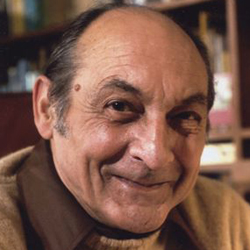
Paul Schmookler

In the late 1970’s Paul could be found collecting aquatic insects along any Catskill stream, or off the grills of cars in parking lots or from storefront windows. One of these creatures, dead or alive, provided him with an actual entomological study so he could create a model in feathers and furs on a hook.

By the 1980s, Paul Schmookler had become an authority in the angling world with his collection of vintage fly tying materials, creative fly tying skills and library of 19th century fly tying books. Twice his expertise was featured in Sports Illustrated. Once as an entomologist/collector and once as a creative salmon fly tier.

However, it was not until 1993 when his first book, The Salmon Flies of Major John Popkin Trahere, was published that Schmookler’s impact on the fly tying community started to take hold. He did this by demonstrating the beauty and intricacy of classic exhibition salmon flies.

In 1994 and 1997 his groundbreaking coffee table books, Rare and Unusual Fly Tying Materials: A Natural HistoryVolume 1 – Birds and Volume 2 – Birds & Mammals, educated fly tiers, collectors and artists about the beauty and history of fly tying and raised the standard by which future angling and fly-tying books would be judged. These books were followed by Forgotten Flies (1999). Finally, the upscale publication, Art of Angling Journal, a culmination of a lifetime of Schmookler’s interests succeeded in leaving the legacy of having raised the image of classic and creative fly tying from a mere craft to an accepted art form.

Art of Angling Journal was the first and only fly tying publication to receive five Gold Ink Awards, and was recognized internationally, for outstanding design and content.

Given his expertise in tying imitative and realistic flies, to a historic journey into the depths offlytying, to sharing the history of the art and craft, Paul continues to be recognized as one of themost knowledgeable and creative flytyers in the world.

CFFCM OfficeHOF3
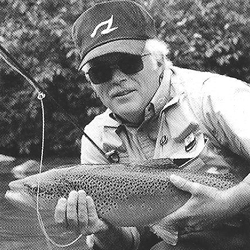
Joe Humphreys

Joseph Humphreys is a nationally known fly fisherman, conservationist, author, and educator.  He has been a fishing instructor to anyone who wants to learn the sport, including VIPs, for over 45 years.  Joe has traveled the world representing the U.S. in fly fishing competitions, has guided presidents & celebrities, held the Pennsylvania state record, hosted the first national fly fishing show on ESPN, and was inducted into the Fly Fishing Hall of Fame.

Joe is also a published author of numerous books and articles on the sport of fly fishing, including: Trout Tactics, Trout Tactics Revised, and On the Trout Stream.  In addition to these major and well-respected works, he is a regular contributor to regional and national journals and periodicals.  Along with his writing, he has also produced and starred in several highly successful videos including, “A Casting Approach to Nymphing Tactics”, “A Casting Approach to Dryfly Tactics in the Brush”, “A Casting Approach to Flyfishing to Catch Fish, Not Just to Cast”, “The Dryfly and the Top Water Game”, and the Telly Award winner for Best Video, “The Night Game”.

As one of the foremost educators in angling, Joe Humphreys directed the renowned angling program at the Pennsylvania State University for nineteen years, providing introductions and foundations to young and old for a life-long enjoyment of the sport.  He has lectured throughout the United States enhancing the reputation of Pennsylvania fishing.

Joe’s passions also include working with local and national organizations to improve stream quality. He’s proud that his students have become the advocacy base to sustain Pennsylvania waters and believes that teaching youth to fly fish, including the U.S. Youth Fly Fishing Team, is pertinent for further protection of and respect for the environment.

Joe also dedicates his time to honoring our Veterans through his support of Project Healing Waters and strongly believes in the healing properties of streams.

A documentary titled, “Live the Stream” about Joe’s life on and off the stream is currently in production. The trailer and more information can be found at:  www.livethestreamfilm.com

CFFCM OfficeHOF3
Tom McGuane
tom_mcguane.jpg

Tom McGuane is one of America’s most distinguished essayists and writers, who has written extensively on fly fishing.  As Nick Lyons has written,  McGuane “along with his great novels and stories and films has written, with dazzling skill, much about what he calls his ‘life’ in fishing…. He does it in what has become a major body of work about fly fishing—parts of An Outside Chance, all of Live Water and The Longest Silence. He is, as all of the best writers must be, a man on whom nothing is lost.”

Tom is a frequent contributor to The Atlantic Monthly, Sports Illustrated, Esquire and The New Yorker. He has also written and produced such films as The Missouri Breaks and Even Cowgirls Get the Blues. Among McGuane’s awards and recognitions are the Western Literature Association’s Lifetime Achievement Award, the Northwest Booksellers’ Award, selection as a finalist for the National Book Award, the Roderick Haig Brown Award from the Fly Fishing Federation and the Landowners’ Conservation Award from Trout Unlimited.  His work 92 in the Shade was nominated for a National Book Award. In 2010, McGuane was inducted into the American Academy of Arts and Letters.

Today, Tom actively helps the Tarpon & Bonefish Trust by raising funds and promoting awareness of its science-based research efforts through such television shows as Buccaneer & Bones, currently in its third season of production.

McGuane has been in the ranching business for over 40 years.  He is a member of the Cutting Horse Hall of Fame.  He and his wife Laurie live in Southwest Montana where McGuane has lived since 1968.  They have four children and five grandchildren, all living in Montana.  It comes as no surprise that his lifelong passion is fishing, especially as it involves his beloved western landscapes

CFFCM OfficeHOF3
Paul Young

In 1926, Paul Young’s rod designs would change the future of bamboo rods.  He developed a unique line of shorter, lighter and thinner rods.  At first, customers and the industry scoffed at these rods.  They were considered novelties or toys not capable of catching large fish. Little did they realize the lasting impact Paul’s designs would have on rodmaking.   Young’s designs flourished.  To meet the increased demand, Paul used blanks from South Bend, E.W. Edwards and Heddon and finished them personally to his specifications.

Chauncey Lively recalled, “When Paul developed his Midge rod, his most diminutive rod at 6 feet 3 inches and 1 3/4 ounces, it caused quite a stir and became a very popular model.  Paul mentioned several times that a customer was using a Midge for Atlantic Salmon and he fussed and fumed about it. It worried Paul because the little rod was not intended for such heavy-duty work.  The customer was Arnold Gingrich, publisher of Esquire, and a distinguished author.” A short time later, A.J. McClane, a long-time fishing editor at Field and Stream, also discovered they were indeed capable of catching large Atlantic Salmon and of course he too wrote about them.

Young was more than a rod maker.  His first book Making and Using the Dry Fly (1933) was revised in 1935 as Making and Using the Fly and Leader.  It provided the angler with instructions on many topics, such as how to tie a fly and how to properly fish a stream.  In addition to fly tying and reading the water, Young’s appraisal of the use of leaders and their construction were monumental in the development of modern day fly fishing.   Being an inquisitive, thoughtful man, Young never failed to dive into the many areas of fly fishing.  Given his prominence in the tackle business, his opinions held sway at all levels as evidenced by his involvement in any number of different types of hooks he helped Mustad design for fly tyers and anglers alike.

Young was also a strong proponent of and popularized the “curve cast.”  Chauncey Lively observed this about Paul, “Curve-casting was almost a religion to Paul.  He designed his leaders and flies to ‘lie back’ and cause the line to bow up-current of fly and leader.  It is, basically, an underpowered cast executed sidearm, and it is very difficult to control accurately, particularly in breezy weather. But Paul did it with perfection and I think it had much to do with his great success as a fly fisher.” Lively recalled an incident when, “The trout was in a tough spot, sitting in a slow-water pocket surrounded by faster currents.  Regardless of how much slack we threw, the fly would quickly begin dragging.  The trout seemed to know it had an advantage; it would appear under the fly and drift along until the drag began. Then it would disappear. When Paul’s turn came he crossed to the opposite side of the stream, made one backhand curve-cast and caught the brownie. It looked embarrassingly easy.”

Throughout his early books, Young made it clear that fly-fishing should not be all-consuming but be about More Fishing, Less Fussing, the title of his catalogs which he later used as the title of his 1940 book.   As a fly tying and fly tackle retailer, Paul developed his own line of materials, hook designs, tapered formula leaders and of course bamboo fly rods that are highly treasured today.

CFFCM OfficeHOF3
Stu Apte

A student of Joe Brooks and a pioneer in saltwater fly-fishing, Stu Apte has held 44 saltwater records, some of which still stand.  He has fished every corner of the world from Islamorada to Iceland and everywhere in between.

Over the years, Stu developed many new fly patterns and was honored by having his iconic orange and red tarpon fly selected for a U.S. postage stamp.  He improved knots and leaders, wrote books, was an early pioneer in filming fly fishing adventures, appeared in many fishing shows on television and is a regular contributor to various fishing magazines.

Stu spent his time guiding anglers in the Lower Keys for tarpon and bonefish, as well as exploring the “Back Country” of Florida Bay and the Everglades for snook and redfish.  It wasn’t long before he also headed offshore to chase and catch dolphin, wahoo, tuna and kingfish on light tackle and a fly rod.

Given his experience guiding and fishing in Florida and routine frustration with the strength and durability of fishing gear, boats and engines in the harsh salt and sun environment, Stu started working closely with manufacturers to improve their saltwater performance.  He brought his own real life experience to rod & reel design and was instrumental in creating better drags, finding more corrosion-resistant metals, various reel parts, rod guides and reel seats.

An ardent conservationist, Stu is one of the founding members and is on the executive board of the Bonefish & Tarpon Trust.  He is an advisory board member to the IGFA and an officer and trustee of the Everglades Protection Association.

Stu was elected to the Fishing Hall of Fame in 1969 and the IGFA Hall of Fame in 2005.  His CFFCM Hall of Fame selection recognizes all of his contributions to the sport of fly fishing.

CFFCM OfficeHOF3
Larry Solomon

Larry Solomon, with Eric Leiser in 1977, wrote The Caddis and the Angler. This groundbreaking book proved to be the forerunner of many books on caddis flies and continues to serve as a reference on the topic.  Besides covering caddis flies, the book explores new fly patterns and techniques for fishing them.  Larry based much of what he learned for the book on observation of caddis flies in an aquarium in his New York City apartment.

As an outgrowth of his study of caddis, Larry developed the later-to-become-popular “delta wing” concept for tying caddis imitations.  This concept showed up in other anglers’ writings and has been generally incorporated into fly tying of caddis flies.

Larry went on to write another book, The Complete Book of Modern Fly Fishing, published in 1979.  Here he provided anglers with information on tackle, fly casting, fly tying and fly fishing in both fresh and salt water.  Larry also highlighted the importance of taking care of our cold-water fisheries and encouraged anglers to support conservation organizations such as Theodore Gordon Flyfishers, Trout Unlimited and the Federation of Fly Fishers.

Moreover, dozens of fledgling anglers have accompanied Larry on the stream to their lasting benefit, as they learned entomology, casting techniques, water reading and the wiles of trout from him.  Countless more gratefully learned the “arts of angling” programs at TGF and other fishing shows.

Larry also dedicated much of his time and effort to protecting trout fisheries.  He served as an officer and then as president of Theodore Gordon Flyfishers in the late 70s. He continued to press for appropriate stream regulation.  During this time, he actively participated in the fight by TGF against the Prattsville Pumped Storage Proposal by New York State Power Authority.  Larry also worked with other organizations to improve water release schedules from NYC reservoirs into Catskill rivers and worked against various local threats to streams in New York State and elsewhere.

CFFCM OfficeHOF3
Joe Brooks

Joe Brooks, the acknowledged dean of international outdoor writing, fly fished every corner of the world. He was the fishing editor of Outdoor Life magazine, featured on ABC’s American Sportsman TV series, wrote thousands of articles and authored ten books including: Trout FishingSaltwater Fly Fishing and The Complete Guide to Fishing Across North America.

His teaching generosity was unmatched and his influence is felt by all anglers including such legendary fly fisherman as Lefty Kreh, Stu Apte and Jimmy Albright. Dozens more of today’s greatest anglers have continued to pay forward Joe’s gift of the love of fishing.

Brooks suggested Lefty Kreh start writing about the outdoors for local Maryland papers, taught him to fly fish and pushed him to become the tournament director for the Miami Met Fishing Tournament.  When asked what he could do to repay Joe for his kindness and counsel, Joe replied, “Lefty, just share with others what I have shared with you.” According to Lefty Kreh,  “Joe Brooks was one of the best known American fly fishermen for many, many years…and my biggest influence”.

Brooks was the Chairman of Fresh Water Committee of the Maryland Fish and Game Association.  His interest in youth education blossomed with the founding of the youth educational organization known as The Brotherhood of the Junglecock, a group he remained active in throughout his life.

Brooks believed in starting fly fishermen at a young age and with the assistance of J. Hammond Brown and Frank Burt Smoot, he developed “The Junior Outdoorsman”.  It was published by the Maryland Fish and Game Association and was targeted to young boys to teach them about fishing and conservation.

Considered one of the first modern saltwater fly fishing pioneers, Brooks developed the famous “Blonde” design of streamer flies that worked both in fresh and saltwater.  He was one of the first to angle for bonefish with a fly and his subsequent articles helped create an entire new fishery in Florida and the Bahamas.

An early advocate for light tackle angling, Joe believed strongly in using lighter leaders and tippets, especially as the technology for manufacturing synthetics was improving. Jimmy Albright said, “Joe was a traditionalist. The notion that you should over-tackle a fish was simply not in the cards.”  Therefore, it is not surprising that Joe Brooks would write about the time he fished with Stu Apte off Little Torch Key when Stu caught one of his many world-record tarpon on 16-pound test tippet.

     Joe Brooks died of a heart attack at the age of 71, while wading in one of his favorite trout rivers, the Big Hole in Montana, but he is still connected to every fly fisher in the 21st Century and that connection will last forever.

CFFCM OfficeHOF3
George Parker Holden
george_parker_holden.jpg

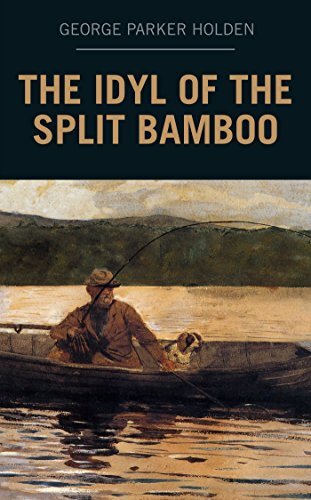
As an angling student, George Parker Holden followed the writings of Thaddeus Norris on American angling.  In 1919 Holden penned his first book, Streamcraft. At the time, America was experiencing a truly unique fly fishing evolution – weaning itself from the British tradition. This new American manner of fly fishing was distinct in both style and technique. It relied on an approach of recognizing specific natural insects and developing their imitations. The book American Trout Insects, written and illustrated by Louis Rhead influenced Holden to do further investigations and confirm his findings by testing his selection of patterns on Catskill streams.  Streamcraft  was truly ‘An Angling Manual’ on how to’s for the angler.  His second book followed only a year later and was titled The Idyl of the Split Bamboo Rod. It was also a ‘how to’ book focusing on the construction of bamboo fly rods.  ‘Idyl’ remains a classic for those interested in cane rod making. In his Angling Recollections and Practice (1931), we learn of Holden’s first experiences that evolved into a passion so admired by what he called “the brotherhood.”

Holden’s books, together with contributions to Forest and StreamField and StreamOutdoor AmericaOutdoor Life and the Anglers’ Club of New York bulletins, were informative yet influential. Out of George Parker Holden’s genius and angling passion would emerge many followers and admirers; among them were cane rod builder protégé Everett Garrison (1893-1976) and Catskill region fly angler and tyer Harry Darbee (1906- 1983).

Both of those individuals would rise to (and perhaps surpass) Holden’s own level of fame–Garrison as one of the most talented, creative and influential rod builders who ever held bamboo in his hands and Darbee who became the Catskill trout fly tyer personified.

Harry Darbee once wrotethat George Parker Holden’s Streamcraft “probably had as much influence on fly tiers and fishers as anyone else in his day. His book was the first one I owned and I almost memorized it in the early days of our commercial tying.” Darbee credited Holden as being the first person to publicize Catskill fly tying lore. Holden’s Streamcraft chapter titled “The Angler’s Flies and How to Tie Them” demonstrated step-by-step fly tying instructions using photographs in place of illustrations. Everything from setting wings to winding hackles was described in Holden’s now classic book. Holden’s inclusion in Streamcraft of William Mills & Son color fly plates that featured bass, trout and salmon flies made the book a valuable fly pattern reference guide. Dressings for many of the standard patterns were featured in the book, along with interesting historical observations surrounding the flies.

Beyond discussion of fly tying, fly pattern descriptions and dressings, casting techniques and rod selection notes, Holden’s Streamcraft alsointroduced to his readers to the names of several members of the growing “Catskill School” of fly tyers.  These and other regional fly fishing personalities would later become icons commonly associated with fly angling history: Theodore Gordon and his Protégées Roy Steenrod and Herm Christian along with George M.L. LaBranche and Louis Rhead.

CFFCM OfficeHOF3
Ed Shenk
ed_shenk.jpg

Ed Shenk is best known for his many contributions to fly fishing centered on the LeTort Creek in Carlisle, Pennsylvania. In the course of his life-long love affair with the LeTort, Ed originated and tested a number of flies, including the LeTort Cricket, the Flat Wing LeTort Hopper, the Shenk Cress Bug and the Shenk Sculpin.

Ed popularized the dubbing loop or fur chenille method.  He was the first to trim these fur loop tied flies to specific shapes such, as the flat oval of the Shenk Cress Bug.  He also originated the Shenk Minnow and the “double trico.”

Ed also brings his talents to bear on cold-water conservation issues.  With Jim Bashline, Ed shared the first presidency of the Cumberland Valley Chapter of Trout Unlimited.  For his efforts to save and preserve our fisheries, he has received recognition, including the Limestoner Award, the Charles Fox “Rising Trout” Award, the George Harvey Award and the Order of the Hat (Harrisburg Fly Fishers).

He is a dedicated writer on fly fishing. With his book, Fly Rod Trouting (1989) Ed shares the secrets of his techniques and tactics, fly patterns and the saga of “Old George,” a gargantuan trout of the LeTort.  He has also published numerous articles in fly fishing and other sporting magazines.  In addition, he has created a video, Ed Shenk, Master of the Le Tort (2000) describing tying and fishing five of his fly patterns.

Teaching has also been a forte of Ed’s.  He has served as fly fishing instructor over the years for a variety of organizations, including Allenberry Inn, Orvis and Penn. State University.

CFFCM OfficeHOF3
Carrie Frost

Back in the 1800s, American fly anglers had to purchase fishing flies from Great Britain. That changed when Carrie Frost opened the doors of her C.J. Frost Fishing Tackle Manufacturing Company in 1886. What started in the kitchen of her parents’ home eventually put Stevens Point, Wisconsin on the map as the ”Fly Tackle Capital of the World.”

Inspired in childhood by her father, John Frost, she took to the long rod. She could cast well and fish well but her frustration was that trout flies were not manufactured in the United States. Carrie soon found herself experimenting with various materials obtained from local birds and fur-bearers. After tying many types of flies, suited at first to please only her father, others came to her door asking for her fur and feather creations.

Carrie Frost expected to enter the teaching profession but her true passion in life was fishing and so she abandoned the classroom and followed her dreams. Demand led to the establishment of her tackle company, at first employing the household maid and neighborhood girls to assist with fly tying. The demand for Frost flies grew so rapidly that by 1917 the number grew to 150 employees. In only a decade after the establishment of her company, Stevens was annually selling 4.5 million flies and other pieces of tackle.

The enormous success of the C.J. Frost Fishing Tackle Company led to national sales through well-respected establishments, such as Montgomery Ward and others. Her slogan “Fish Fight for Frost Flies,” was known throughout the country. A local business group purchased the company, eventually changing its name to Weber Life Lifelike Fly—the slogan was changed to “If Weber Makes it, Fish Takes it.” Weber eventually became the Weber Tackle Co.

CFFCM OfficeHOF3
Roderick Haig-Brown

Roderick Haig-Brown (1908-1976) was an English-born, naturalist, fly fisher, author, philosopher, magistrate, educator and ardent conservationist.

He spent most of his adult life in British Columbia fishing for trout, salmon and steelhead.   Blessed with a graceful pen, he put words to deeds and actions that the non-angler could not only understand, but also truly appreciate.

He penned almost 30 books, including such noted works as A River Never Sleeps and the remarkable book series:  Fisherman’s Spring, Summer, Fall and Winter and wrote innumerable essays and articles for outdoor magazines and journals.  He pioneered a fundamental environmental awareness and appreciation for the beauty and wildlife of the Pacific Northwest amongst the populace of B.C., which ultimately helped to preserve the precious resources in the Campbell River watershed, the Adams’ River steelhead runs and king salmon in the Nimpkish River.

CFFCM OfficeHOF3
Doug Swisher & Carl Richards

In 1971, this dynamic duo turned the fly fishing world on its collective hare’s ear by marrying the science of entomology with fly-tying in the book Selective Trout.  In it, they introduced a radical new concept to dry fly fishing, the no-hackle dry fly, giving picky trout an imitation fly with a more convincing, natural silhouette; and anglers a new arsenal of deadly fly patterns.

Championed by Joe Brooks in Outdoor Life and drawing upon the works of such legends as Flick, Schwiebert and Marinaro, these two gentlemen went allover the eastern and western US trout streams collecting bugs, taking pictures, classifying their findings and then developing entirely new types of life-like trout flies.  Under the critical eye of the editor, Nick Lyons, they produced for Crown Publishing the largest selling fly fishing book at 200,000+ copies.  They went on to write well received follow-up books like:  Fly Fishing Strategy, Stoneflies and Emergers.

CFFCM OfficeHOF3
Barry & Cathy Beck

Pennsylvania natives Barry and Cathy Beck are the husband and wife photojournalist team that exemplifies the best of the old and the new world of fly fishing.  From their simple roots running a fly shop on the small freestone Fishing Creek near Benton, PA and fishing with the likes of Vince Marinaro on Falling Spring Run they have since traveled the world together, hosting adventure-travel fly fishing expeditions and teaching modern fly casting techniques.

They continue to take breath-taking angling pictures that change the way we view the fly fishing world with their photographs.  The Becks have scored hundreds of print magazine covers and articles, fishing catalogs, websites and are now populating the exploding new world of Internet virtual fly fishing e-zines.  They have authored numerous books, including The Blue Ribbon Guide to PA Trout Streams, Seasons on the Bighorn and the Outdoor Photographers’ Handbook. 

CFFCM OfficeHOF3
John Alden Knight

John Alden Knight (1890-1966) was a banker, syndicated writer, fly-tier, hunter, naturalist, casting expert, angling filmmaker and developer of the Solunar Tables. 

“Jack” Knight as he was known by his friends, helped popularize a simple yellow & red bucktail streamer (a.k.a. “The Assassin”) which he redubbed the “Mickey Finn” because of its ability to knock-out brookies and rainbow trout.  Knight was friends with Hewitt, Jennings, LaBranche and Alfred “Sparse Gray Hackle” Miller, spending much time developing his fly fishing & fly tying expertise on the Beaverkill, Neversink, Esopus and Brodhead River with these noted gentlemen.  His love for hunting and the natural world held him to be an early proponent of catch & release:  “one nice thing about fishing – you can always put ’em back.”

His greatest legacy was methodically codifying the rhythmic effects of the sun and moon phases on fish (and game) into peaks and troughs by longitude and latitude in his Solunar Tables developed in 1926 and published in 1936 to immediate acclaim (and some scoffing).  In addition to several noted hunting books, he is also remembered for his books The Theory and Technique of Fresh Water Angling, The Complete Book of Fly Casting and Modern Fly Casting.

CFFCM OfficeHOF3
Louis Rhead

A talented artist, Louis Rhead came to America in 1883 from Etruiria, Staffordshire England. Although Rhead was widely known for his professional accomplishments in the surrounding NYC art world of the early 1900’s, including his contributions to a series of juvenile classics (Swiss Family Robinson, Gulliver, Grimm, Anderson and others) Rhead is most admired by anglers for contributions to Fly Fishing literature. Given Rhead’s obvious artistic passions, he could not have selected a more apt subject for his first book, The Speckled Brook Trout, published in 1902 by R.H. Russell in New York. In the volume, he marveled that the fish was “the most beautiful of our fresh water fauna, the more so from its mantle of rose and violet which it wears”. Above all of Rhead’s contributions that he made to the sport of fly fishing, through his staggering number of written pieces largely focused on Catskill waters- (including several books and dozens of magazine articles); one cannot deny that he was the first to help sever the American fly fisher’s dependence on British fly fishing entomological works. His American Trout Stream Insects will likely remain a cherished work in the history of American fly fishing.

CFFCM OfficeHOF3
Jack Gartside

One of fly-fishing’s great iconoclasts, he represented the Huck Finn in all of us. His innovative fly patterns, like tiny soft hackle patterns, his elegant “sparrows” and the rambunctious saltwater “Gurglers”, were often tied on a vice clamped to the steering wheel of his taxi while waiting for fares in and around Boston. That is how he made enough money to go on his next fly fishing adventure. Jack lived a fishing life with unbridled enthusiasm, from the trout rivers of Yellowstone Park and New Zealand, to his beloved Boston Harbor for striped bass. “I frankly don’t make much of a living, but I make a hell of a life,’’ he told the Globe Sunday Magazine. He was a “trout bum” in the best sense of the words, before we even knew what one was.

Among his many recognitions, he received the FFF’s “Arnold Gingrich Award”, TU’s Appreciation for the Protection and Enhancement of Cold Water Fisheries, the Outstanding Achievement Award for Fly Tying and The Izaak Walton Fly Fishing Club’s prestigious “Jack Sutton Award”. Jack Gartside relished living his dreams of being able to “light out” at a moment’s notice, astride “Gerald” his inflatable giraffe, just like Huck on his raft; something not lost on this former high school English teacher.

CFFCM OfficeHOF3
John Randolph
john_randolph.jpg

Editor Emeritus of Fly Fisherman Magazine, John Randolph has made world-wide contributions to the sport of fly fishing. Following in the footsteps of his father, who wrote the daily Wood, Field & Stream column for The New York Times, Randolph first came to the Catskills in 1956. In the late 1960’s he began his newspaper career as a writer/editor for a Vermont newspaper and then founded The Vermont Sportsman Monthly. His association with Fly Fisherman Magazine came in 1978, where in a short time he became editor/publisher, a position he held until his retirement in 2009. Beyond his contributions to Fly Fisherman Magazine itself, Randolph wrote numerous fly fishing pieces for other major outdoor magazines and also authored three books. Randolph often brought into his writings not only fly-fishing technique pieces, but also the important environmental impacts that affected waters around the world.

CFFCM OfficeHOF3
Art Lee
art_lee.jpg

An observer, inquisitor, essayist, teacher, author and piscator, Art Lee is a complete angler. Nobody likes a know-it-all, but everyone loves a great coach. For over 40 years, Art explained the ins-and-outs of fishing a dry fly more effectively on Catskill trout streams than anyone else. He shared the secrets of fishing the riffling hitch for salmon. His common sense articles written when ”Editor at Large” of Fly Fisherman Magazine were delightfully composed to be informative for every angler. Art continues to write articles and in particular for the Atlantic Salmon Journal where he has written more consecutive articles than any other fishing writer in any other magazine.

In a review of Art’s book, Fishing Dry Flies for Trout on Rivers and Streams, Gray’s Sporting Journal said, “It is said that, back in the ‘40s and 50s, if an angler had one book on trout, it would be Ray Bergman’s Trout. This book is–shoot me if you want–a better written, more sophisticated book.” High praise indeed, and yes, good old Izaak Walton would have indeed liked Art Lee.

CFFCM OfficeHOF3
George E. M. Skues

Considered one of the greatest trout fishermen that ever lived. Through his experimentation and observations, Skues proved to the dry fly fishing purists that undersurface, sub subsurface and in surface feeding was commonplace for trout. Of course, many dry fly fishermen of the time considered this to be heresy and stir debate. Skues’ early observations and tactics continue as proof today that fly fishermen have to be well versed in reading water, insect life cycles, and understanding the feeding pattern of fish for on stream success. Ultimately, Skues continues to influence and encourage fly fishermen to explore and experiment as he did 100 years ago.

CFFCM OfficeHOF3
Gardner Grant

Has lifelong contributions in preserving, protecting, and promoting fly fishing. Gardner’s past includes: president of Theodore Gordon Flyfishers, Federation of Fly Fishers, national director of Trout Unlimited, director of The Atlantic Salmon Federation, director of the Catskill Fly Fishing Center and Museum, Chairman of the Board of the American Museum of Fly Fishing, founding director of the NYS Environmental Planning Lobby, organizer and co-chair of the Wild Trout Symposia I, II, and III. He organized the 1st catch, tag, and release experiment with Atlantic salmon in Iceland, made two trips to Moscow to arrange the first angling trip to Russia by westerners since 1917, was a bluefish and striped bass fly fishing pioneer. These are just a few of the many achievements, recognitions, and accomplishments of this concerned and generous benefactor to the sport of fly fishing.

CFFCM OfficeHOF3