
Frank Smoot was a born conservationist working on the Migratory Game Bird Act in 1928 at the age of 22 and in 1930 became the Youth Conservation Director of the Maryland State Game & Fish Protective Association. This position was the beginning of his long commitment to conservation and his devotion to educating the youth in fly fishing. An early member of the Brotherhood of the Jungle Cock, he was also one of the original organizers of the Maryland Wildlife Federation working with many youth groups including The 4H and Boy Scouts of America. An accomplished nature artist, Frank, up until his death in May 2006 just weeks shy of his 100th birthday, would provide sketches to all of the children attending Brotherhood of the Jungle Cock gatherings. His long term commitment to the youth of our country in the education of conservation and cold water fisheries was unparalleled.

Born in 1811, Norris devoted his life to fly fishing. As a young man, he explored American Waters and pursue the sport of American fly fishing in its infancy. Well-educated and well read in angling literature, he discovered Old World flies, tackle and fishing techniques were not suitable for American waters. Making modifications, Norris developed the first true American procedures for fly fishing and was an early pioneer in the development of the fly rod, andselling tackle and flies. He communicated these discoveries through many articles in sporting periodicals and his book, The American Angler’s Book in 1864. This book became every angler’s bible and Thaddeus became the recognized Father of American Fly Fishing. It should be noted that Theodore Gordon learned to tie flies from The American Angler’s Book.

A prolific writer for numerous publications, author of many books, fly tying innovator, world traveler, industry consultant , fly fishing pro, club and organization advisor, outdoor photographer, public speaker, educator, saltwater fly fishing pioneer, expert fly caster, and simply too many more to list, can only be summarized in one word, “Lefty”. This man is the most recognized fly fisherman alive. His induction into the Fly Fishing Hall of Fame was a direct result of the wisdom, guidance, and humor that he willingly shares with everyone he meets; the qualities found in a true legend.

Poul Jorgensen is considered the greatest fly tyer of all time. Born and raised in Denmark, he came to the United States in the 1960’s and developed a keen interest in fly tying, through his mentor, William Blades. Abandoning his career as an engineer, he devoted his life to the art of fly tying. Through his many books and videos, Poul generously shared his talents and techniques with the world, making every tyer, a better tyer.
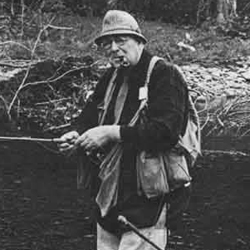
Acknowledged as the “Dean of American Fly Fishermen”, Sparse wove his magic amongst those who fished the Catskill rivers as well as anglers from afar who could only dream of the experiences he created with his unique ability to put pen on paper. Fishless Days, Angling Nights, published in 1971 brought together many of his life experiences and has become a hallmark ofwhat the sport of fly fishing is all about. Sparse brought life to the gentle art of angling and his spirit created the common denominator by which all fly fishermen are measured. His wit, factual and fictional embellishments, and historical knowledge would always play into a tale; both short and tall.

William A. Chandler a close friend of Theodore Gordon and Roy Steenrod, is best known among anglers today for his refinement of the Light Cahill. It was his role as a conservationist and fisheries advocate where he made fundamental, enduring contributions to sport fishing. Along with Steenrod, William founded the Federation of Sportsmen’s Clubs of Sullivan County and made it into a powerful lobbying force on behalf of public fishing, and improved stocking practices. Through his efforts, the State of New York acquired the “Catskill Mountain Hatchery” on a tributary of Willowemoc Creek in DeBruce. As a member of the State Assembly in 1937, he was instrumental in passage of a law that allowed for public fishing on all waters impounded by dams. The angler who fishes public water or a reservoir or a tail water in New York has to be grateful to William Chandler and should reflect on the irony of his personal fate. William and his wife, Martha, lost the “River of Our Dreams” and their hotel when their property was taken and inundated so that the Neversink Reservoir could serve a “thirsty horde in a far off city.”

A self taught student in the science of trout behavior and insect life, his campus and laboratory was his home water of the Letort River in Pennsylvania. His studies resulted in his first book, A Modern Dry Fly Code, which far sophisticated at the time, failed commercially when first published in 1950. However, it ‘s reissue, 20 years later, influenced Swisher and Richards in the development of the “no hackle” flies and the “comparaduns” of Caucci and Nastasi, made it a classic resource. His second book, In the Ring of The Rise , 1976, provided a masterful analysis of the various riseforms associated with feeding trout and the splendid illustrations and superb photography for anglers to experience stream success.

Born a coal miner’s son in the Allegheny Mountains of Pennsylvania, George Harvey learned subsistence fishing from his father. However, his Uncle Ira turned him into a fly fisher. By dismantling flies, he learned their construction. With a handy cache of chicken feathers from his uncle’s meat market, George was ready to craft and sell his own creations at the age of ten. His friendship with the Dean of the Agricultural School at Penn State led him into an angling career. He started the first college-accredited course in fly casting and tying, researched water temperature effects on trout activity, developed leader systems which enhance fly presentation, and participated in the innovative programs devised by the Pennsylvania Department of Fisheries. Techniques of Trout Fishing and Fly Tying (1985) is George’s basic, practical guide to the arts and skills of angling. George Harvey: Memories, Patterns and Tactics, published in 1998, records his experiences and observations fishing spring creeks with the great anglers of his time, and teaching thousands the pleasures of angling.

The First Lady of American Angling. For almost seven decades Joan has continually been devoted to the promotion and education in sport of fly fishing. From pre teen to present Joan has contributed to the education of hundreds of thousands of fly fishers through out the world with her books, articles, classes, films, demonstrations, and appearances. Her marriage to Lee Wulff in 1967, they opened their fly fishing schools on the Beaverkill in 1979 to provide the fly fishing community with a premier learning center.
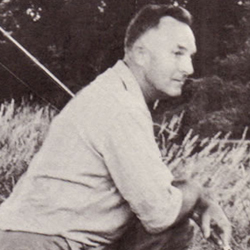
How to describe Charles Fox? Gentleman, author, fly fisher, conservationist, historian. Try all of the above. In his home on the Letort, Charlie formed his philosophy and techniques, especially with terrestrials, that are laid out in his best-known book, The Wonderful World of Trout. It was also here that Charlie helped pioneer the concept of “catch and release” fishing in the 1940’s, more than a decade before Trout Unlimited championed the cause. It was also here that he entertained fellow members of the fly fishing fraternity: Ernest Schweibert, Vince Marinaro, Sparse Grey Hackle, Ed Shenk and Joe Brooks. Charlie editedPennsylvania Angler magazine for several years and also worked as an editor at Stackpole Publishing Company.

Al McClane has been described as an angling innovator, casting engineer, tackle technician, skilled photographer, and world’s foremost fisherman. As Field & Stream’s fishing editor for 30 years, his articles, views, and opinions entertained, informed and educated millions of fishermen. McClane’s Standard Fishing Encyclopedia was just one of fifteen books he authored. His writings are the lessons of a master he had spent a lifetime acquiring knowledge of fish and fishing. Among his fishing pals, the most noted were Dan Bailey, Ray Camp, Harry Darbee, Arnold Gingrich, Bert Lahr, Ted Trueblood and Charles Ritz.
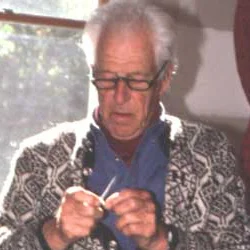
No man had a greater impact on American tackle, lures and fishing tactics than Lee Wulff. He shared his expertise in a lifetime of lectures, publications, film productions, and in later life, at his fly fishing schools with Joan on the Beaverkill. He loved to solve angler problems and to undertake challenges, like exploring wilderness waters in his small plane, catching large fish on light tackle, and tying tiny flies in his fingertips. Early in his career, more than 60 years ago, Lee was a lone voice, urging anglers to enjoy their fishing but “to come home empty-handed” because “game fish are too valuable to be caught only once.”

With the introduction of the European Brown Trout to American waters, George LaBranche is credited as the first American angler to master the art of dry fly fishing to catch these magnificent game fish. His research and analysis of the requirement of fast water fishing led him to invent the decoy method of floating a fly many times over a fish’s lie, thus creating an artificial hatch. His book, The Dry Fly in Fast Water, remains a classic today for the true trout fly fisherman.

Roy Steenrod was only tying student of Theodore Gordon, whom he often guided and visited. Roy is responsible for passing on the distinctive characteristics of the Catskill dry fly. As an avid tyer and instructor, he took great pleasure in teaching young people the art for fly tying, and he spent many sessions at the DEC Camp in DeBruce. His dry fly, the Hendrickson, named after his friend and fishing companion, A.E. Hendrickson, is probably one of the best known and unchanged dry fly patterns still used to day in its original formula.

Walt and Winnie Dette tied flies from their home along the banks of the Willowemoc Creek from the 30’s until their deaths in the 90’s. Students of the Reub Cross style and technique, their trademark was to construct each pattern for a purpose, posture and durability with a guarantee of quality and workmanship. Legends in their time, they are considered to be the last of the original Catskill fly tyers; however, their daughter Mary, carries on the legacy of the Dette tradition.

E.R. Hewitt was one of the most extraordinary individuals New York has ever known. He was a chemist, inventor, innovator and a truly great fisherman. His keen interest in trout fishing led him to purchase four and a half miles on the Neversink River in 1918 where he created a hatchery and laboratory. Soon after, Hewitt was recognized as a leading authority on stream management and improvement. As an author, he penned several books on angling. As an inventor, he held numerous patents, including the felt soled wading shoe, a fishing line grease, an opaque leader, in interchangeable fly reel and a bivisible trout fly. His innovations make him one of the greatest contributors in the history of fly fishing.
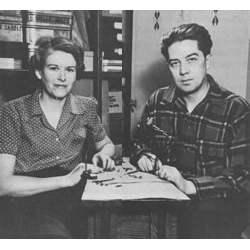
Harry Darbee learned the art of fly tying by untying the flies of Theodore Gordon, Roy Steenrod, Reuben Cross and Herman Christian. He then taught Elsie Bivins, the woman he soon married. In 1935 they established E.B. & H.A. Darbee, Fishing Flies and Fly Tying Materials, Livingston Manor, NY. Pioneers of the classic, sparsely dressed, Catskill style of fly tying, Harry and Elsie were always eager to share their knowledge and techniques with the fly fishing community. There were recognized the world over. Their flies appeared in many books of the time, giving fly tyers a standard of perfection for the flies and patterns not previously published or photographed. Through their countless contributions to fly fishing and fly tying, their development of dry fly dun hackles, and their devotion to the fish, flies and the waters of the area, the Catskill tradition lives on today.

John McDonald was born in Detroit, Michigan in 1906, but his efforts for the last four decades tend to bring him here, to the cradle of American fly fishing. As author of several books and associate editor of Fortune magazine, John brought much to anglers everywhere, through insight on timeless angling art as well as keen interest in the history of our sport and its legends. One of John’s contributions that is of major interest to the Catskill Fly Fishing Center was that of bringing the legend and the writings of Theodore Gordon out of obscurity and back into perspective, deeming Gordon as the father of modern American fly fishing. John McDonald’s sympathies parallel our own as we now strive to preserve our fly fishing heritage and its Catskill origins and heroes.
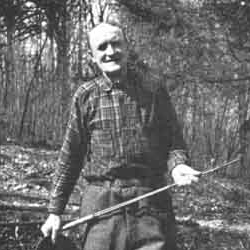
Herman Christian was an old-fashioned outdoorsman and backwoodsman best know as a fishing companion of Theodore Gordon. It was his skilled ability to read water, find big fish with a fly that gained the respect of all fishermen, including Gordon. “You only need eighteen inches of float over a fish,” he used to say, having caught more big trout than any other three fishermen in the Catskills put together. A frequent might fisher; he enjoyed using Gordon’s Bumblepuppy pattern for big browns.

Inspired by Theodore Gordon in his youth, Reuben Cross studied Gordon’s dry flies and made improvements to increase buoyancy. As a professional fly tyer, he was a stickler for perfection and his flies were meticulously and artistically crafted using only the finest materials. Cross originated many patterns including his own Cross Special and shared his secrets in his first book, Tying American Trout Lures. Publication of this book made him the first professional tyer in America to write a book on the subject of fly tying.